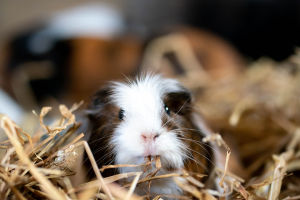
Good day, Lykkers! have you ever noticed how often cavies munch throughout the day? A strand of hay here, a crunchy leaf there, then back to nibbling again only minutes later.
That constant eating is not greed — it is survival. Unlike many household pets, cavies rely on a digestive system that must stay active almost nonstop. Even a short break from food can quickly become life-threatening.
Many owners assume skipping one meal is harmless. For a cavy, however, several hours without food may trigger a medical emergency known as gastrointestinal stasis, often shortened to GI stasis. Once this condition begins, the body can decline frighteningly fast.
Why Cavies Cannot Safely Fast
A healthy cavy’s digestive tract works like a conveyor belt. Fiber-rich food continuously moves through the stomach and intestines, keeping the entire system active. Hay plays the biggest role because its rough texture stimulates chewing and digestion at the same time.
If food intake suddenly slows or stops, the gut loses momentum. Harmful bacteria may begin to multiply, gas can build up painfully inside the intestines, and the digestive tract may partially or completely shut down. This is why even 6–8 hours without eating is considered dangerous.
Unlike cats or dogs, cavies cannot safely “wait until tomorrow” for treatment. Their bodies are designed for near-constant grazing. Once appetite changes appear, time becomes critical.
Understanding GI Stasis in Cavies
GI stasis is not a disease itself but a severe secondary condition caused by something disrupting normal digestion. The intestines slow dramatically, and sometimes movement stops altogether.
One of the earliest warning signs is reduced appetite. Some cavies stop eating pellets first but still nibble vegetables. Others refuse hay while accepting softer foods. Many owners mistakenly believe the pet is simply becoming picky, when in reality the cavy may already be in pain.
As the condition worsens, droppings become smaller, fewer, or disappear completely. A normally social cavy may begin hiding in corners, sitting hunched, or reacting less to sound and interaction. Some grind their teeth softly due to discomfort. Without treatment, dehydration, painful gas buildup, and severe internal complications may follow.
The Most Common Causes Behind Appetite Loss
Poor diet remains one of the leading causes of digestive trouble. Cavies require unlimited access to grass hay such as timothy or orchard grass. Diets heavy in pellets, sugary treats, or low-fiber foods can interfere with normal gut movement over time.
Dental problems are another major trigger. Cavy teeth grow continuously throughout life. If teeth become overgrown or uneven, chewing turns painful. A cavy with dental disease may approach food eagerly but then drop it from the mouth or avoid hard foods entirely.
Stress also plays a surprisingly large role. Sudden environmental changes, extreme temperatures, loneliness, loud noises, or even the loss of a companion can reduce appetite enough to affect digestion. Illnesses such as bladder stones, respiratory infections, arthritis, or internal pain may also cause a cavy to stop eating.
Hay Is Not Optional
Some owners try replacing loose hay with compressed hay cubes or occasional forage products because they appear cleaner or less messy. Unfortunately, these alternatives do not provide the same constant fiber intake needed to maintain healthy digestion. Loose grass hay should always be available in large amounts. Cavies naturally return to it throughout the day and night.
Timothy hay is widely recommended, while orchard grass is often preferred in households sensitive to hay dust. Fresh grass can sometimes supplement the diet, but it must come from areas free of pesticides, fertilizers, and animal contamination. Even then, grass alone is rarely practical as a full replacement. Without steady fiber intake, digestive movement slows rapidly.
Do Vegetables and Pellets Matter?
Fresh vegetables are important, especially because cavies cannot produce their own vitamin C. Dark leafy greens usually provide the best nutritional balance. Bell peppers are especially valuable because they contain high vitamin C without excessive sugar.
Pellets, however, should remain a supplement rather than the foundation of the diet. A small portion of quality timothy-based pellets may help support balanced nutrition, particularly in aging or recovering cavies. Too many pellets can contribute to obesity and reduce hay consumption.
If vegetables or pellets are unavailable briefly, healthy cavies are unlikely to face immediate danger. Hay access is the true priority. A cavy deprived of hay for several hours faces far greater risk than one missing pellets for a day.
What Owners Should Do Immediately
A cavy refusing food should never be monitored casually at home for long periods. Contacting an exotic veterinarian quickly is essential, even if the pet is still eating small amounts. Experienced exotic veterinarians often recommend supportive feeding products designed for herbivores. These recovery foods help maintain calorie intake and digestive movement while the underlying problem is diagnosed.
Owners should also monitor droppings carefully. A sudden decrease in stool production is one of the clearest signs the digestive system is slowing. Warmth, hydration, and minimizing stress are important, but they are not substitutes for veterinary treatment. GI stasis rarely resolves safely without identifying the underlying cause.
Cavies hide illness exceptionally well. In the wild, appearing weak attracts predators, so many continue acting normal until conditions become severe. That is why appetite changes matter so much. Refusing hay, eating more slowly, or producing fewer droppings may be the first visible signs of a serious internal problem.
Do not wait for obvious suffering. A cavy that stops eating is already in danger. Keep unlimited fresh hay available at all times. Check droppings daily. Weigh your pet weekly using a small kitchen scale — weight loss often appears before behavior changes.
If appetite drops or droppings shrink, call an exotic veterinarian immediately. GI stasis moves fast, but you can stay ahead of it. Hay is not a snack. It is the lifeline that keeps the gut turning. Respect the conveyor belt. Your cavy’s life depends on the next mouthful of fiber.